
Lemprep for Agencies and Consultancies
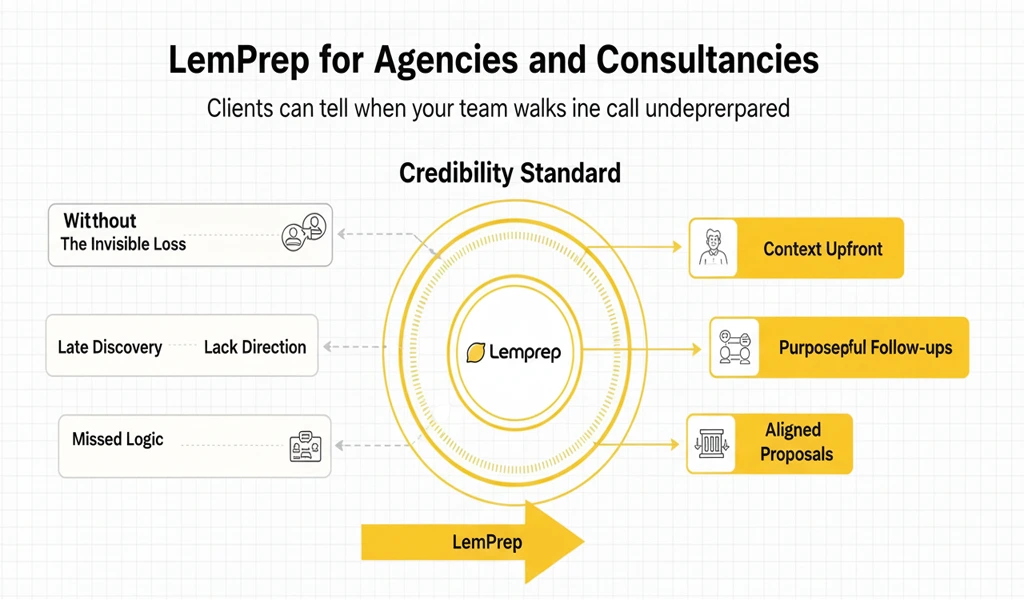
Clients can tell when your team walks into a call underprepared
Agencies rarely lose deals in obvious ways.
They lose them when a buyer expects context and does not hear it.
When discovery questions feel late.
When follow-ups lack direction.
When proposals sound informed but miss the buying logic.
Nothing looks broken.
Revenue still comes in.
But deals take longer, close smaller, or stall quietly.
That pattern is preparation failure.
Why agency preparation breaks down even in good teams
Most agencies believe preparation is happening because effort is visible.
- Who is on the call
- How busy the week is
- How familiar the account feels
- How confident the rep is
- There is no shared standard.
- Junior team members sound junior for too long
- Senior team members rely on memory instead of current signals
- Buyers control the agenda early
- Notes are incomplete or scattered
- Follow-ups drift
- Proposals reflect assumptions, not decisions
- LemPrep exists to remove this variability.
What Lemprep replaces inside an agency
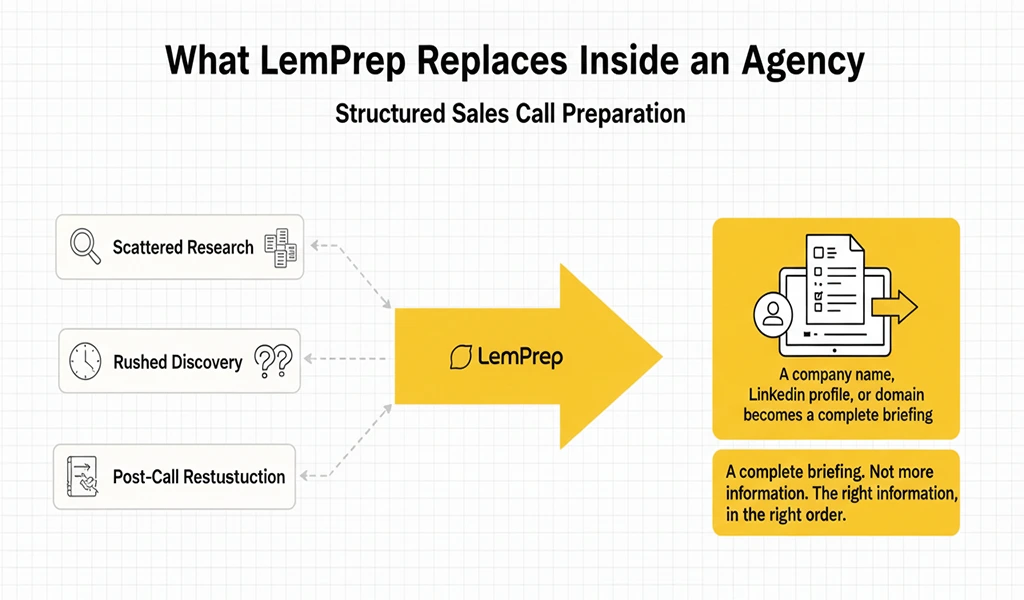
LemPrep replaces scattered research, rushed discovery, and post-call reconstruction with structured sales call preparation.
A company name, LinkedIn profile, or domain becomes a complete briefing that your team can use before the call starts.
Not more information.
The right information, in the right order.
What your team sees before the call starts
Before a conversation begins, LemPrep surfaces business and strategic context that agencies usually uncover too late.
- Business direction and internal pressure points
- Strategic priorities shaping the buying decision
- Market forces affecting urgency
- Your team stops asking surface questions and starts confirming insight.
- Who influences vs who decides
- Where authority sits
- What each role is measured on
- This prevents misaligned conversations and wasted proposals.
What changes during discovery calls
Unstructured discovery produces weak outcomes.LemPrep removes that risk.
- Strategic direction
- Operational reality
- Financial pressure
- Calls stay controlled.
- Buyers feel understood earlier.
- Important topics surface before the meeting ends.
- Likely hesitation points
- Risk sensitivity inside the role
- Language patterns that signal resistance
- This allows teams to adjust framing before objections harden.
What stops deals from stalling later
- How decisions move internally
- Where approvals slow down
- When timing is wrong
- Pace conversations correctly
- Avoid pushing too early
- Re-engage at the right moment
- Organisational changes
- Market movement
- Shifts that reopen conversations
- This replaces hopeful follow-ups with deliberate ones.
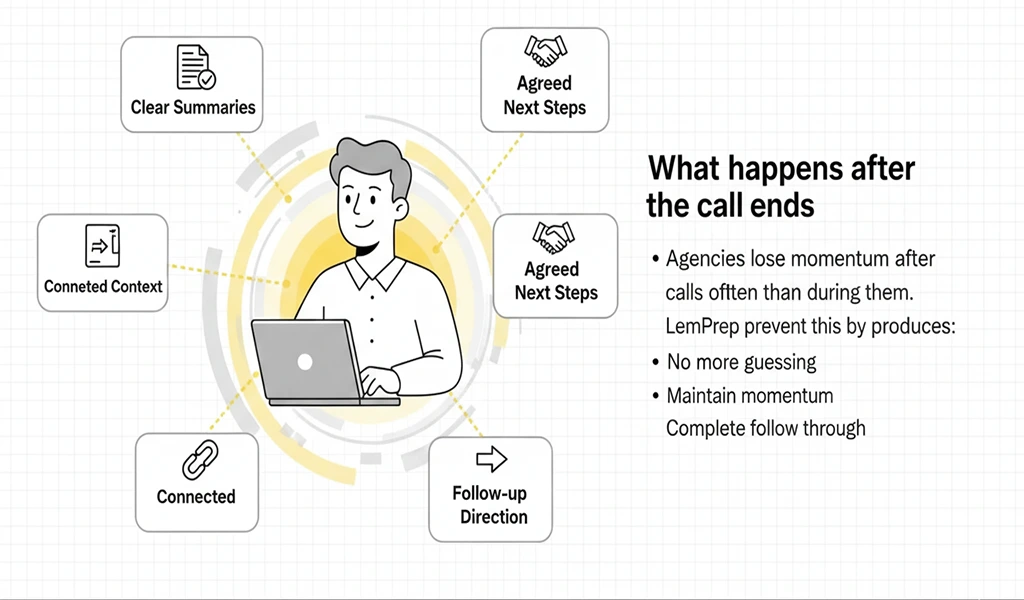
What happens after the call ends
LemPrep prevents this by producing:
- Clear call summaries
- Agreed next steps
- Follow-up direction grounded in what was actually discussed
- No reconstruction.
- No guessing days later.
- Preparation and follow-through stay connected.
How LemPrep enforces preparation without adding work
Tools fail when teams can skip them.
LemPrep is built to be used because it is faster than doing nothing.
Each briefing includes:
- A clear pre-call checklist
- Key areas to explore
- Gaps to probe
- Preparation becomes non-negotiable because it is easy. Managers gain visibility without chasing reps. Quality stays consistent without training overhead.
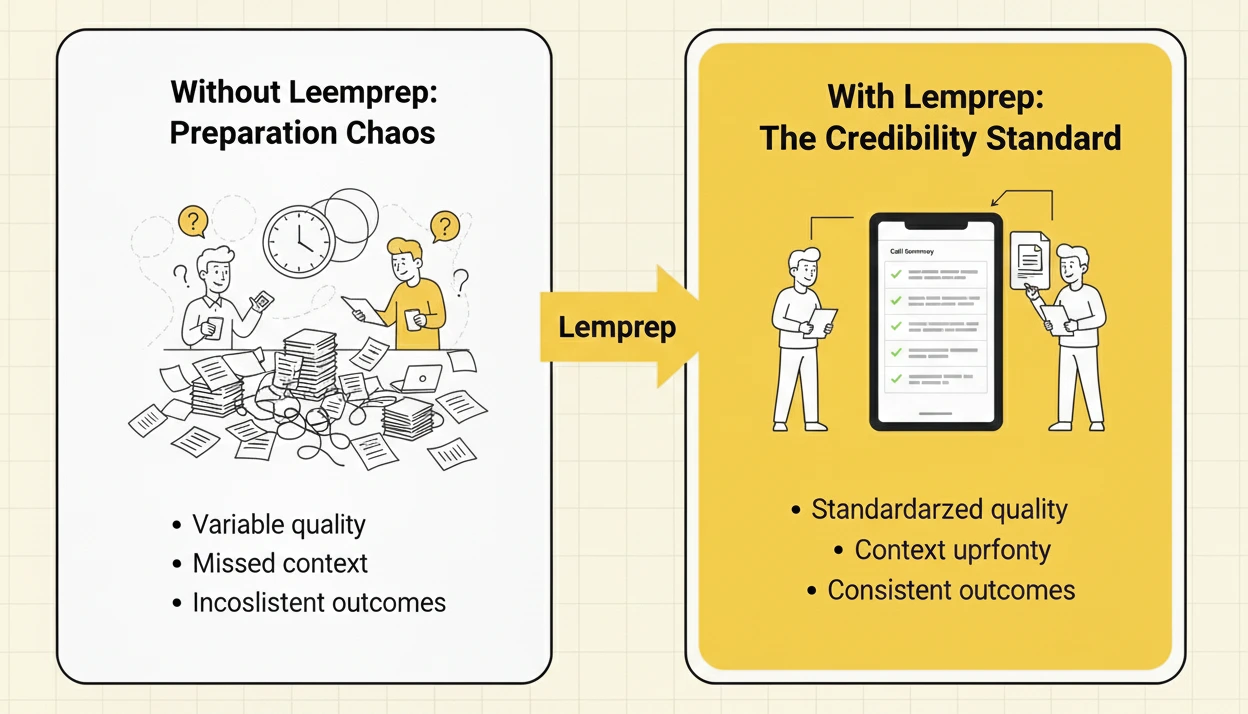
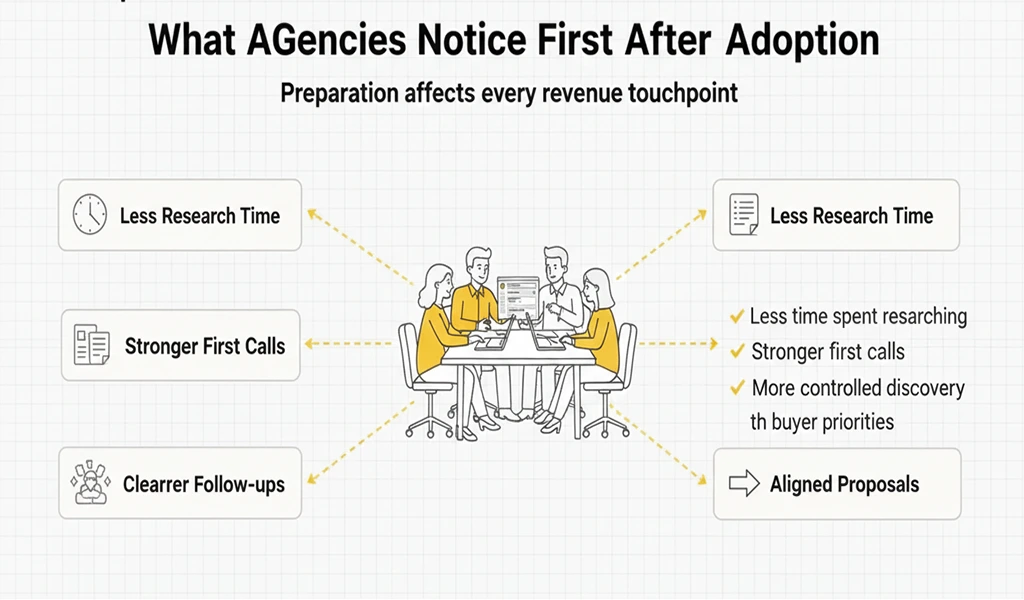
What agencies notice first after adoption
Teams usually report:
- Less time spent researching
- Stronger first calls
- More controlled discovery
- Clearer follow-ups
- Proposals that align with buyer priorities
- These gains compound across accounts.
What LemPrep is and is not
- A sales call preparation system
- A briefing standard for client conversations
- A way to remove prep inconsistency across teams
- A CRM replacement
- A note-taking tool
- A general AI assistant
- It exists for one job only.
- To ensure your team never walks into a call unprepared.
Who LemPrep is built for
- Sell expertise, not commodities
- Run frequent sales, pitch, renewal, or strategy calls
- Rely on credibility early in the process
- Cannot afford preparation to vary by person
- If preparation quality affects revenue, LemPrep belongs in your workflow.
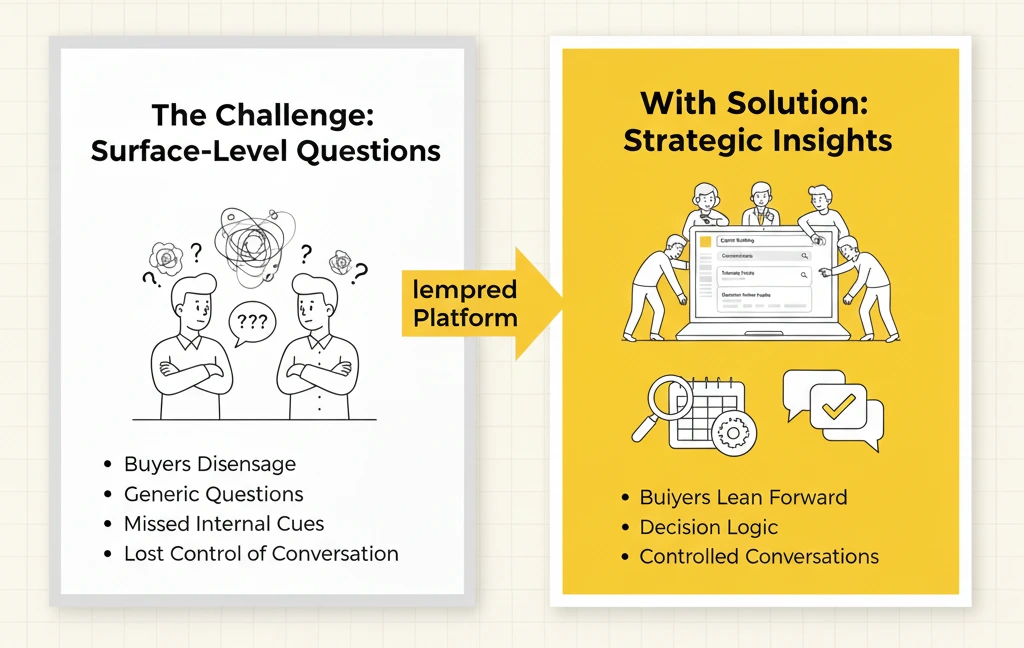
The choice agencies eventually face
You can continue letting preparation depend on:
- Memory
- Experience
- Spare time
Or you can standardise it.
See how agencies prepare sales calls with LemPrep.
Frequently asked questions
LemPrep fixes inconsistent sales call preparation. It ensures every client-facing conversation starts with the same level of context, regardless of who is on the call or how busy the team is.
Manual research depends on time, experience, and attention. LemPrep applies a fixed preparation structure every time, so teams stop relying on memory, guesswork, or rushed searches before calls.
Most teams review a briefing in minutes. The work that normally takes one to three hours is reduced to a short review before the call starts.
No. LemPrep handles preparation and post-call structure. It does not position itself as a recording tool or a CRM substitute.
Junior staff use the same preparation structure as senior team members. This reduces the time it takes for them to sound informed and credible in front of buyers.
After each call, LemPrep provides a clear summary of what was discussed, what matters next, and what actions were agreed. This removes vague follow-ups and proposal guesswork.
Yes. LemPrep sits before and after the call. It improves the quality of what goes into the CRM by making preparation and summaries clearer and more consistent.
Agencies running frequent sales, pitch, renewal, or strategy calls benefit most, especially when credibility in early conversations affects deal outcomes.
Teams usually adopt LemPrep once they realise preparation quality is affecting close rates, deal timing, or buyer trust, even if nothing appears obviously broken.